
About This Architecture
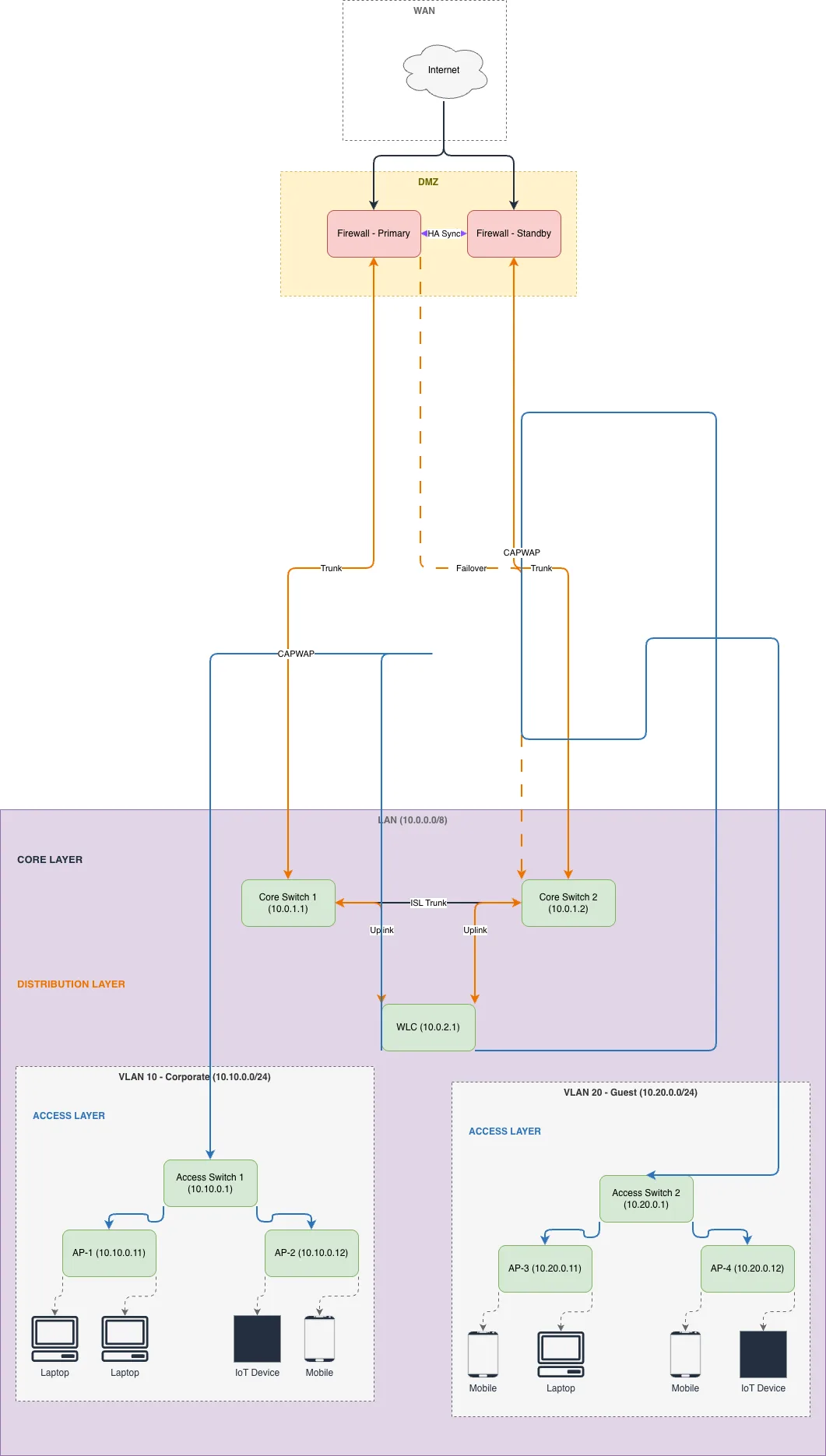
Redundant wireless network with dual firewall failover, core layer switch redundancy, and segregated VLANs for corporate and guest traffic. Internet connects through Primary and Standby firewalls that feed dual Core Switches (10.0.1.1 and 10.0.1.2), which converge at a centralized WLC managing four access points across two access layers. VLAN 10 (Corporate, 10.10.0.0/24) and VLAN 20 (Guest, 10.20.0.0/24) isolate traffic while supporting laptops, mobile devices, and IoT endpoints. This three-tier design eliminates single points of failure at the perimeter and core, ensuring continuous wireless service during maintenance or outages. Fork this diagram on Diagrams.so to customize IP ranges, add additional VLANs, or integrate with your security policies. The architecture demonstrates best practices for enterprise-grade wireless deployments requiring 99.9% uptime.