
About This Architecture
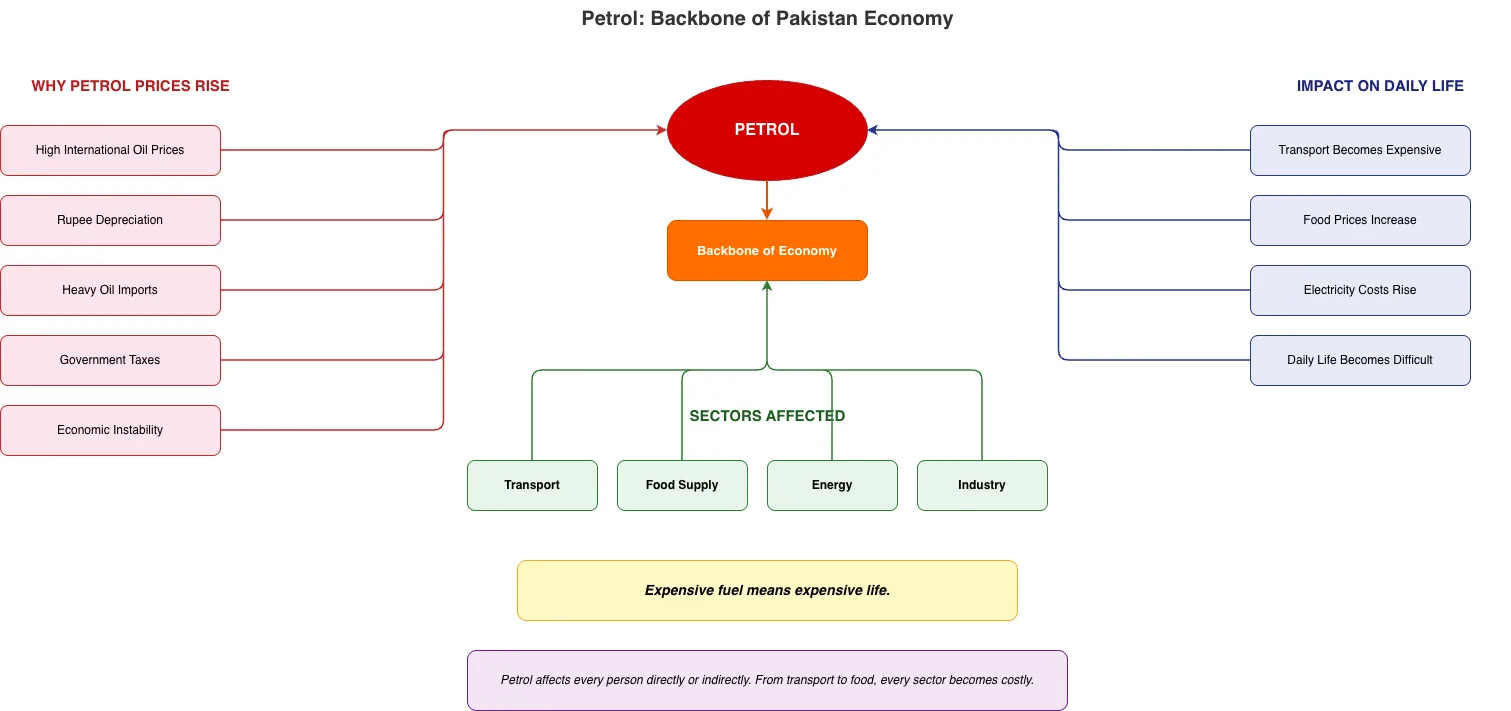
Petrol price fluctuations create cascading economic effects across Pakistan's economy, driven by international oil prices, rupee depreciation, heavy import dependence, and government taxation. Rising fuel costs directly increase transport, food, and electricity expenses, compressing household budgets and reducing purchasing power across all income levels. This diagram illustrates how energy commodity shocks propagate through transport, food supply, energy, and industrial sectors, demonstrating why petrol price stability is critical to macroeconomic stability. Fork this diagram to customize it for regional economic analysis, policy presentations, or educational materials on commodity-driven inflation. The model highlights the interconnected nature of modern economies where a single input—petrol—affects pricing across nearly every consumer-facing sector.