
About This Architecture
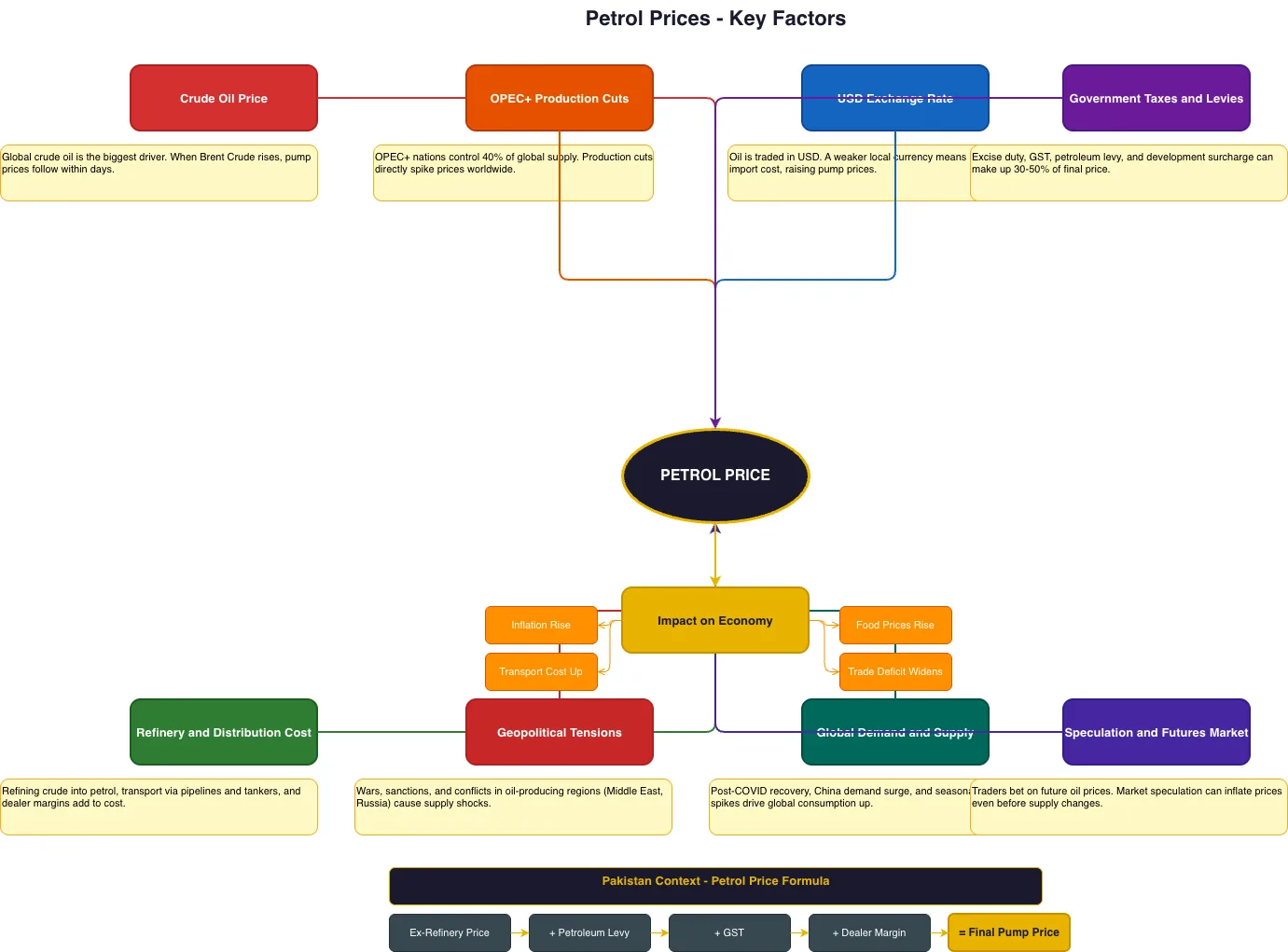
Petrol price determinants span eight major factors: crude oil benchmarks, OPEC+ production decisions, currency fluctuations, government taxation, refinery costs, geopolitical disruptions, demand-supply dynamics, and futures speculation. Each factor feeds into the final pump price through interconnected pathways, with crude oil price and OPEC+ cuts exerting the strongest influence on global markets. Understanding these drivers is critical for policymakers, energy analysts, and economists forecasting inflation and trade impacts. Fork this diagram to customize regional tax structures, add local currency effects, or model scenario-based price projections. The Pakistan petrol price formula breakdown illustrates how ex-refinery cost, petroleum levy, GST, and dealer margin compound to determine consumer-facing prices.