Petrol Price Hike Chain Reaction
About This Architecture
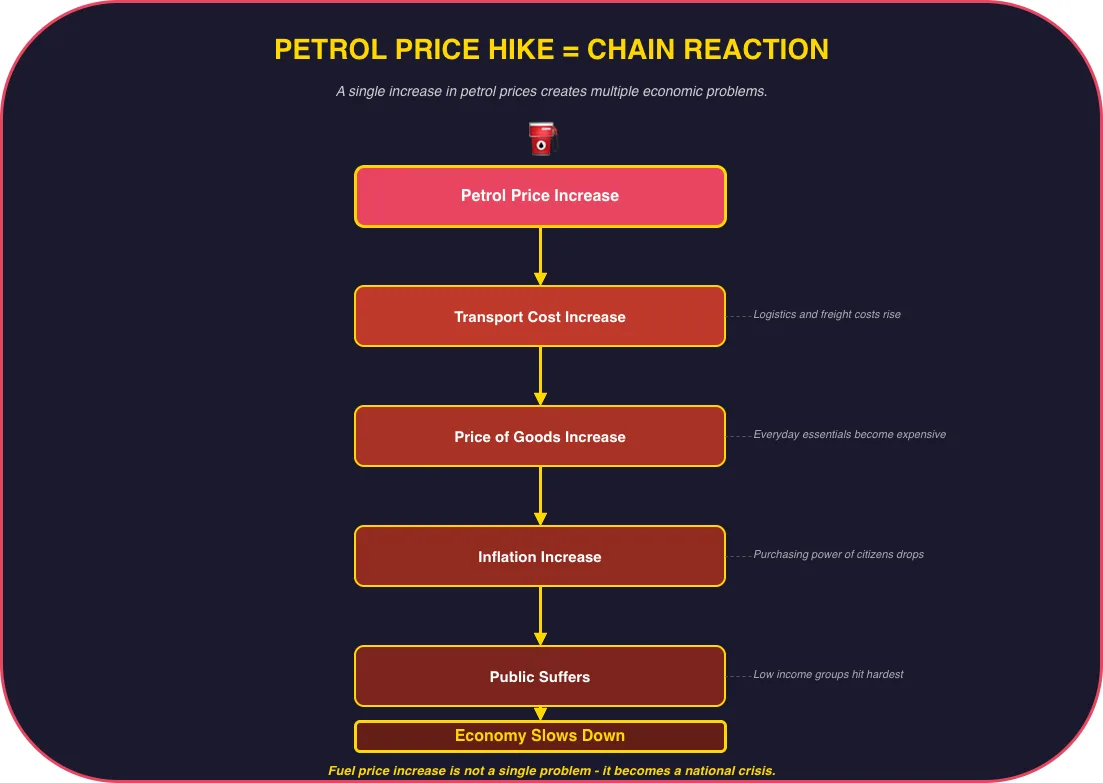
Petrol price hike chain reaction diagram illustrates how a single fuel cost increase cascades into systemic economic damage across transport, retail, and consumer purchasing power. The flow shows petrol price increases triggering transport cost rises, which elevate goods prices, accelerate inflation, and ultimately reduce citizen purchasing power while hitting low-income groups hardest. This cause-and-effect model demonstrates why fuel price volatility becomes a national crisis affecting logistics, everyday essentials, and overall economic growth. Fork and customize this diagram to analyze regional impacts, add policy interventions, or present economic scenarios in reports and educational materials. The diagram emphasizes interconnected economic systems where upstream commodity shocks propagate downstream to affect employment, social stability, and GDP growth.
People also ask
How does a petrol price increase affect the broader economy and everyday citizens?
A petrol price hike triggers a chain reaction: transport and logistics costs rise, pushing up prices of goods and essentials, which accelerates inflation and erodes citizen purchasing power. Low-income groups suffer disproportionately, and the cumulative effect slows overall economic growth, turning a single commodity shock into a national crisis.
- Domain:
- Other
- Audience:
- economics students, policy analysts, and public sector planners
Generated by Diagrams.so — AI architecture diagram generator with native Draw.io output. Fork this diagram, remix it, or download as .drawio, PNG, or SVG.
