Pakistan Petrol Price Crisis Conclusion

GENERALOthersintermediate
Pakistan Petrol Price Crisis Conclusion — GENERAL others diagram

About This Architecture

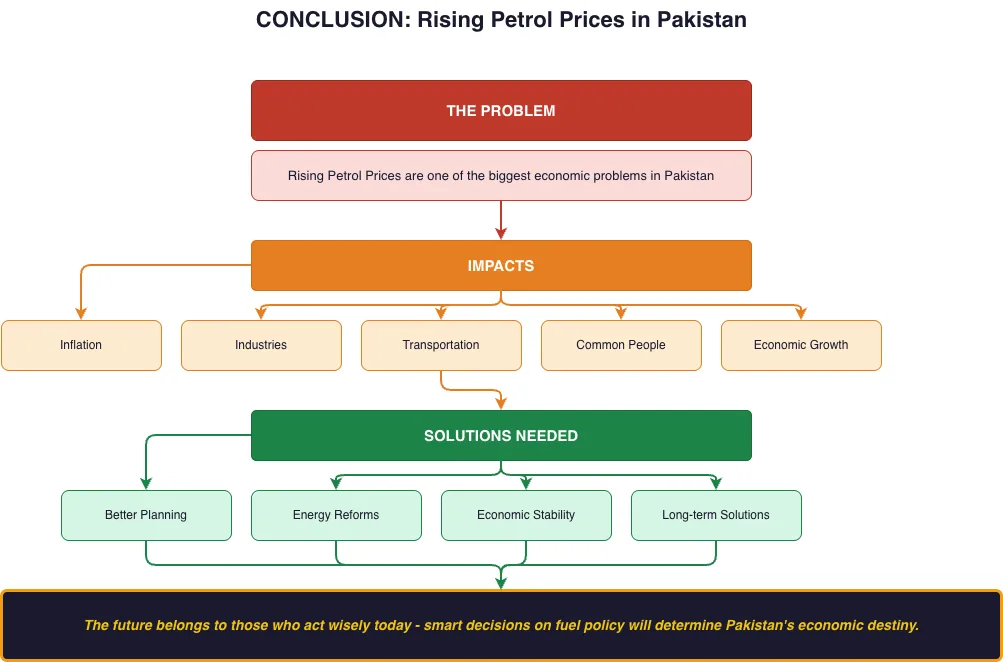
Pakistan's petrol price crisis represents a critical economic challenge with cascading effects across inflation, industrial output, transportation costs, and household budgets. Rising fuel costs directly impact inflation rates, strain industries dependent on energy, increase transportation expenses, and reduce purchasing power for common citizens, ultimately constraining overall economic growth. Addressing this crisis requires coordinated action on better energy planning, structural reforms in the energy sector, macroeconomic stabilization measures, and long-term sustainable solutions beyond short-term price controls. This diagram maps the problem-impact-solution framework to guide policymakers and stakeholders toward evidence-based fuel policy decisions. Fork and customize this analysis on Diagrams.so to tailor it for regional studies, policy briefs, or stakeholder presentations.

People also ask

What are the economic impacts of rising petrol prices in Pakistan and what solutions are needed?

Rising petrol prices in Pakistan create a ripple effect across the economy, driving inflation, burdening industries and transportation sectors, reducing household purchasing power, and constraining economic growth. Solutions require coordinated energy reforms, better planning, macroeconomic stabilization, and long-term sustainable policies that address root causes rather than symptoms.

Pakistan economyenergy policyeconomic crisisfuel pricespolicy analysisinfrastructure planning
Domain:
Other
Audience:
policy analysts and economic strategists addressing Pakistan's energy crisis

Generated by Diagrams.so — AI architecture diagram generator with native Draw.io output. Fork this diagram, remix it, or download as .drawio, PNG, or SVG.

Generate your own others diagram →

About This Architecture

Pakistan's petrol price crisis represents a critical economic challenge with cascading effects across inflation, industrial output, transportation costs, and household budgets. Rising fuel costs directly impact inflation rates, strain industries dependent on energy, increase transportation expenses, and reduce purchasing power for common citizens, ultimately constraining overall economic growth. Addressing this crisis requires coordinated action on better energy planning, structural reforms in the energy sector, macroeconomic stabilization measures, and long-term sustainable solutions beyond short-term price controls. This diagram maps the problem-impact-solution framework to guide policymakers and stakeholders toward evidence-based fuel policy decisions. Fork and customize this analysis on Diagrams.so to tailor it for regional studies, policy briefs, or stakeholder presentations.

People also ask

What are the economic impacts of rising petrol prices in Pakistan and what solutions are needed?

Rising petrol prices in Pakistan create a ripple effect across the economy, driving inflation, burdening industries and transportation sectors, reducing household purchasing power, and constraining economic growth. Solutions require coordinated energy reforms, better planning, macroeconomic stabilization, and long-term sustainable policies that address root causes rather than symptoms.

Pakistan Petrol Price Crisis Conclusion

AutointermediatePakistan economyenergy policyeconomic crisisfuel pricespolicy analysisinfrastructure planning
Domain: OtherAudience: policy analysts and economic strategists addressing Pakistan's energy crisis
0 views0 favoritesPublic

Created by

May 16, 2026

Updated

May 16, 2026 at 10:19 AM

Type

others

Need a custom architecture diagram?

Describe your architecture in plain English and get a production-ready Draw.io diagram in seconds. Works for AWS, Azure, GCP, Kubernetes, and more.

Generate with AI