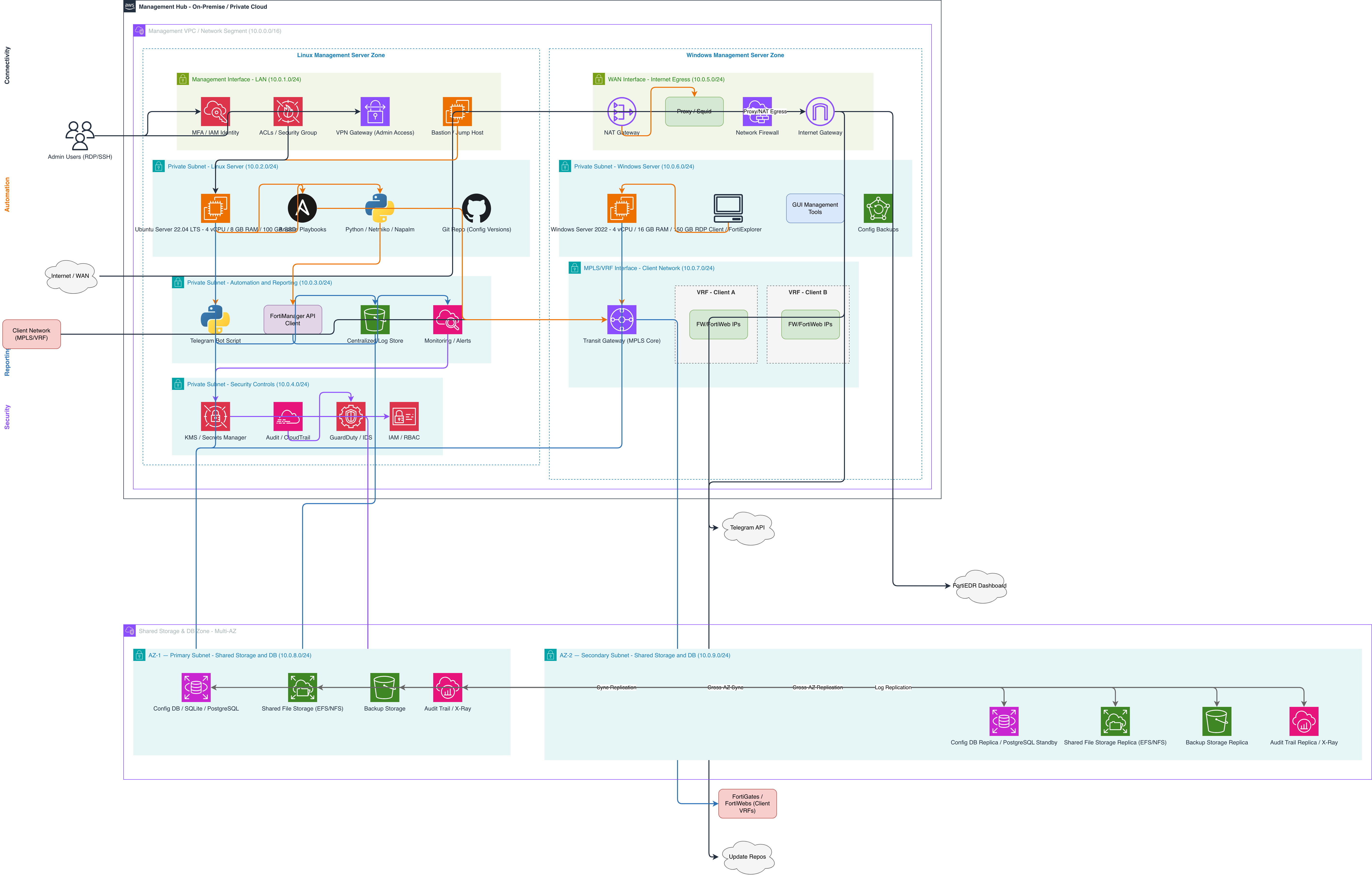
Multi-Homed Management Hub - Network Automation

aws · architecture diagram.

About This Architecture

Multi-homed management hub architecture centralizes Fortinet FortiGate and FortiWeb appliance management across isolated client VRFs using AWS VPC with dedicated Linux and Windows management zones. Traffic flows from client networks via MPLS/VRF interfaces through Transit Gateway to segmented private subnets housing Ansible automation, FortiManager API clients, and centralized logging. The design enforces least-privilege access through bastion hosts, MFA/IAM identity controls, and network firewalls, with KMS encryption and CloudTrail audit trails protecting sensitive configurations. Fork this diagram on Diagrams.so to customize subnets, add additional client VRFs, or integrate with your existing Fortinet deployment pipeline. This architecture demonstrates zero-trust principles for managing distributed security appliances while maintaining compliance and operational visibility.

People also ask

How do I design a centralized management hub on AWS to manage multiple Fortinet FortiGate and FortiWeb appliances across isolated client networks?

This diagram shows a multi-homed AWS VPC architecture with dedicated management zones (Linux and Windows), Transit Gateway integration for MPLS/VRF client networks, and Ansible-based automation for configuration management. Security is enforced through bastion hosts, MFA/IAM identity controls, KMS encryption, and centralized logging with CloudTrail and GuardDuty.

Multi-Homed Management Hub - Network Automation

AWSadvancednetwork-automationFortinetVPCsecurity-operationsmulti-tenant
Domain: Cloud AwsAudience: AWS network architects designing multi-tenant security operations centers with centralized Fortinet management
0 views0 favoritesPublic

Created by

March 9, 2026

Updated

March 9, 2026 at 9:25 PM

Type

architecture

Need a custom architecture diagram?

Describe your architecture in plain English and get a production-ready Draw.io diagram in seconds. Works for AWS, Azure, GCP, Kubernetes, and more.

Generate with AI