
About This Architecture
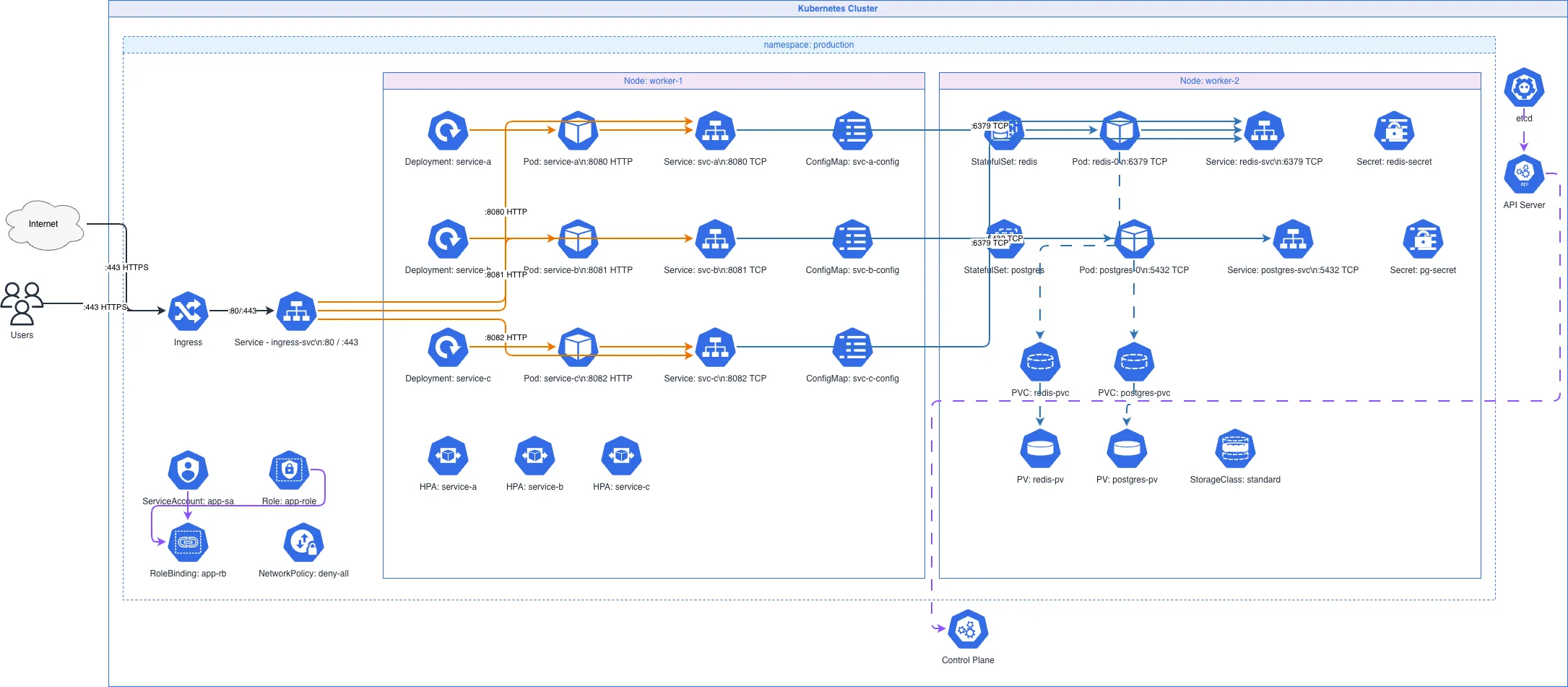
Production-grade Kubernetes microservices architecture with three stateless services (service-a, service-b, service-c) fronted by an Ingress controller, backed by Redis and PostgreSQL StatefulSets for caching and persistence. Traffic flows from users through the Ingress to service-specific ClusterIP Services, which route to Deployments with horizontal pod autoscaling enabled, while backend services connect to Redis and PostgreSQL via dedicated Services with encrypted Secrets. The cluster enforces least-privilege access through ServiceAccounts, Roles, RoleBindings, and a default-deny NetworkPolicy, with persistent data protected by PersistentVolumeClaims mapped to PersistentVolumes via the standard StorageClass. Fork this diagram on Diagrams.so to customize node counts, add additional services, or adjust resource requests for your environment. This pattern demonstrates Kubernetes best practices including separation of concerns, declarative configuration via ConfigMaps, secure credential management, and stateful workload isolation.