
About This Architecture
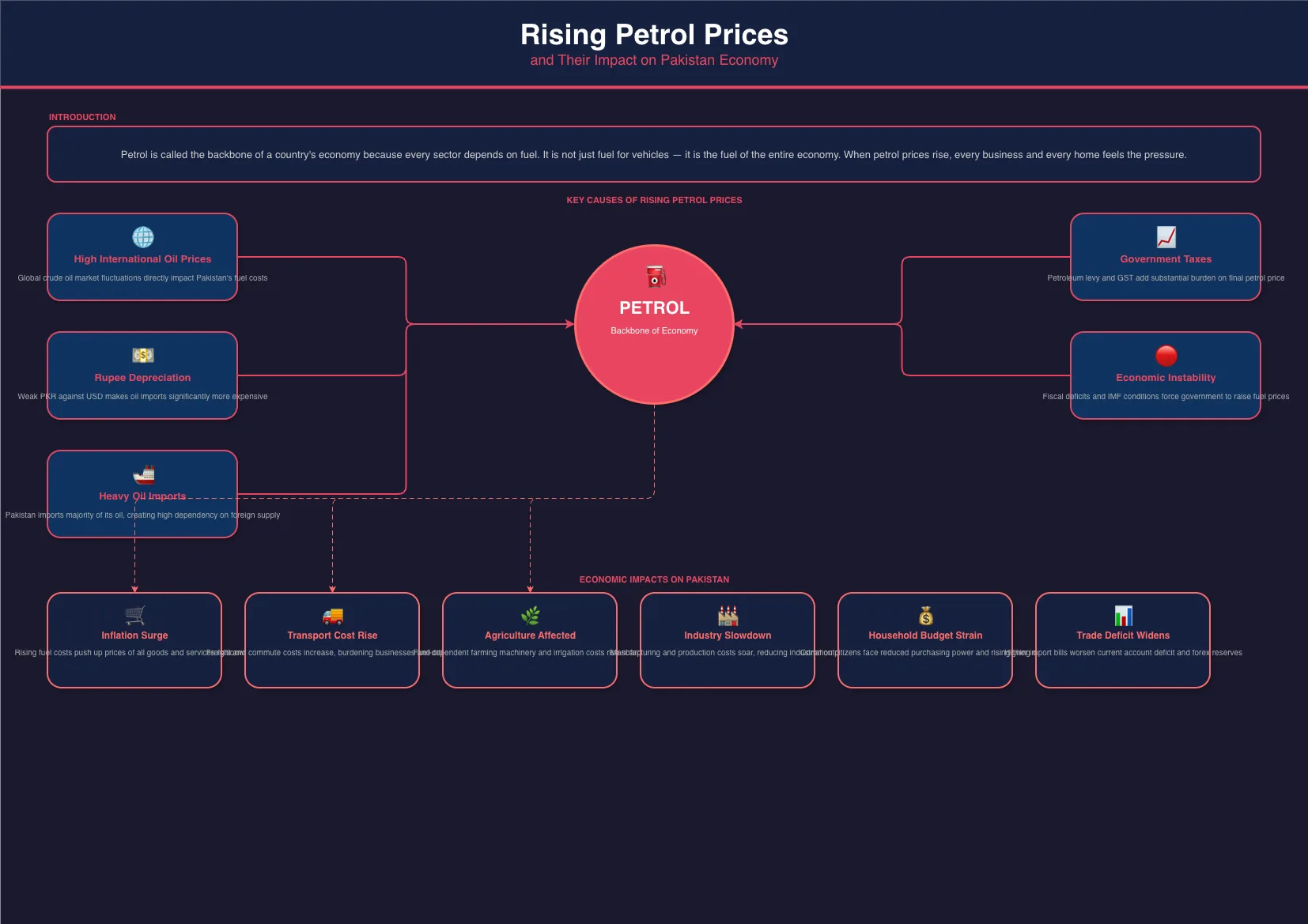
Rising petrol prices in Pakistan stem from five interconnected causes: global crude oil market volatility, rupee depreciation against the US dollar, heavy reliance on oil imports, government taxation through petroleum levies and GST, and fiscal pressures from IMF conditions. These factors converge to drive fuel costs upward, triggering cascading economic impacts across inflation, transportation, agriculture, manufacturing, household budgets, and trade deficits. Understanding this cause-and-effect relationship is critical for policymakers, economists, and citizens navigating Pakistan's economic challenges. Fork this diagram on Diagrams.so to customize it for presentations, research papers, or policy briefs. The visual hierarchy makes it ideal for educational content and stakeholder communication.