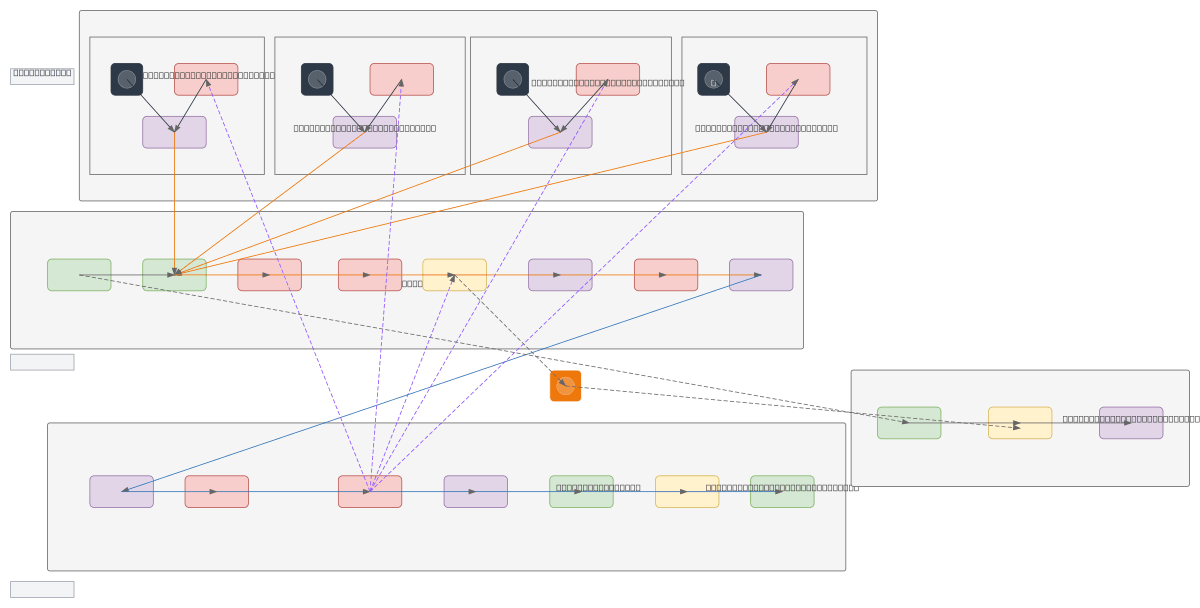
IoT Secure Hybrid RNG Architecture

GENERALArchitectureadvanced
IoT Secure Hybrid RNG Architecture — GENERAL architecture diagram

About This Architecture

Hybrid RNG architecture combining device-level entropy sources (ADC noise, ring oscillators, power jitter, thermal noise) with PRNG and SHA-256 hashing across IoT, edge, and cloud tiers. Multiple sensor devices, industrial controllers, and smart meters feed entropy into distributed Hybrid RNG instances that communicate via TLS/MQTT to an Edge Gateway with aggregated entropy pooling and mTLS authentication. Edge Firewall, RNG Aggregator, and Edge API Gateway enforce defense-in-depth before data reaches Cloud API Gateway, Cloud Auth/IAM, and Centralized KMS for secure key distribution and audit logging. Fork this diagram to customize entropy source types, adjust TLS cipher suites, or integrate with your KMS provider.

People also ask

How do you design a secure IoT architecture that combines multiple entropy sources with hybrid RNG across device, edge, and cloud layers?

This diagram shows a three-tier approach: IoT devices (temperature sensors, controllers, smart meters) generate entropy via ADC noise, ring oscillators, power jitter, and thermal noise, each feeding Hybrid RNG instances using PRNG and SHA-256. Edge Gateway aggregates entropy through an RNG Aggregator, enforces mTLS authentication, and routes encrypted traffic via TLS/MQTT and VPN to Cloud KMS for

IoT securityhybrid RNGentropy sourcesedge computingcryptographyKMS
Domain:
Security
Audience:
Security architects designing IoT cryptographic infrastructure with hybrid entropy sources

Generated by Diagrams.so — AI architecture diagram generator with native Draw.io output. Fork this diagram, remix it, or download as .drawio, PNG, or SVG.

Generate your own architecture diagram →

About This Architecture

Hybrid RNG architecture combining device-level entropy sources (ADC noise, ring oscillators, power jitter, thermal noise) with PRNG and SHA-256 hashing across IoT, edge, and cloud tiers. Multiple sensor devices, industrial controllers, and smart meters feed entropy into distributed Hybrid RNG instances that communicate via TLS/MQTT to an Edge Gateway with aggregated entropy pooling and mTLS authentication. Edge Firewall, RNG Aggregator, and Edge API Gateway enforce defense-in-depth before data reaches Cloud API Gateway, Cloud Auth/IAM, and Centralized KMS for secure key distribution and audit logging. Fork this diagram to customize entropy source types, adjust TLS cipher suites, or integrate with your KMS provider.

People also ask

How do you design a secure IoT architecture that combines multiple entropy sources with hybrid RNG across device, edge, and cloud layers?

This diagram shows a three-tier approach: IoT devices (temperature sensors, controllers, smart meters) generate entropy via ADC noise, ring oscillators, power jitter, and thermal noise, each feeding Hybrid RNG instances using PRNG and SHA-256. Edge Gateway aggregates entropy through an RNG Aggregator, enforces mTLS authentication, and routes encrypted traffic via TLS/MQTT and VPN to Cloud KMS for

IoT Secure Hybrid RNG Architecture

AutoadvancedIoT securityhybrid RNGentropy sourcesedge computingcryptographyKMS
Domain: SecurityAudience: Security architects designing IoT cryptographic infrastructure with hybrid entropy sources
0 views0 favoritesPublic

Created by

April 18, 2026

Updated

April 18, 2026 at 4:37 PM

Type

architecture

Need a custom architecture diagram?

Describe your architecture in plain English and get a production-ready Draw.io diagram in seconds. Works for AWS, Azure, GCP, Kubernetes, and more.

Generate with AI