
About This Architecture
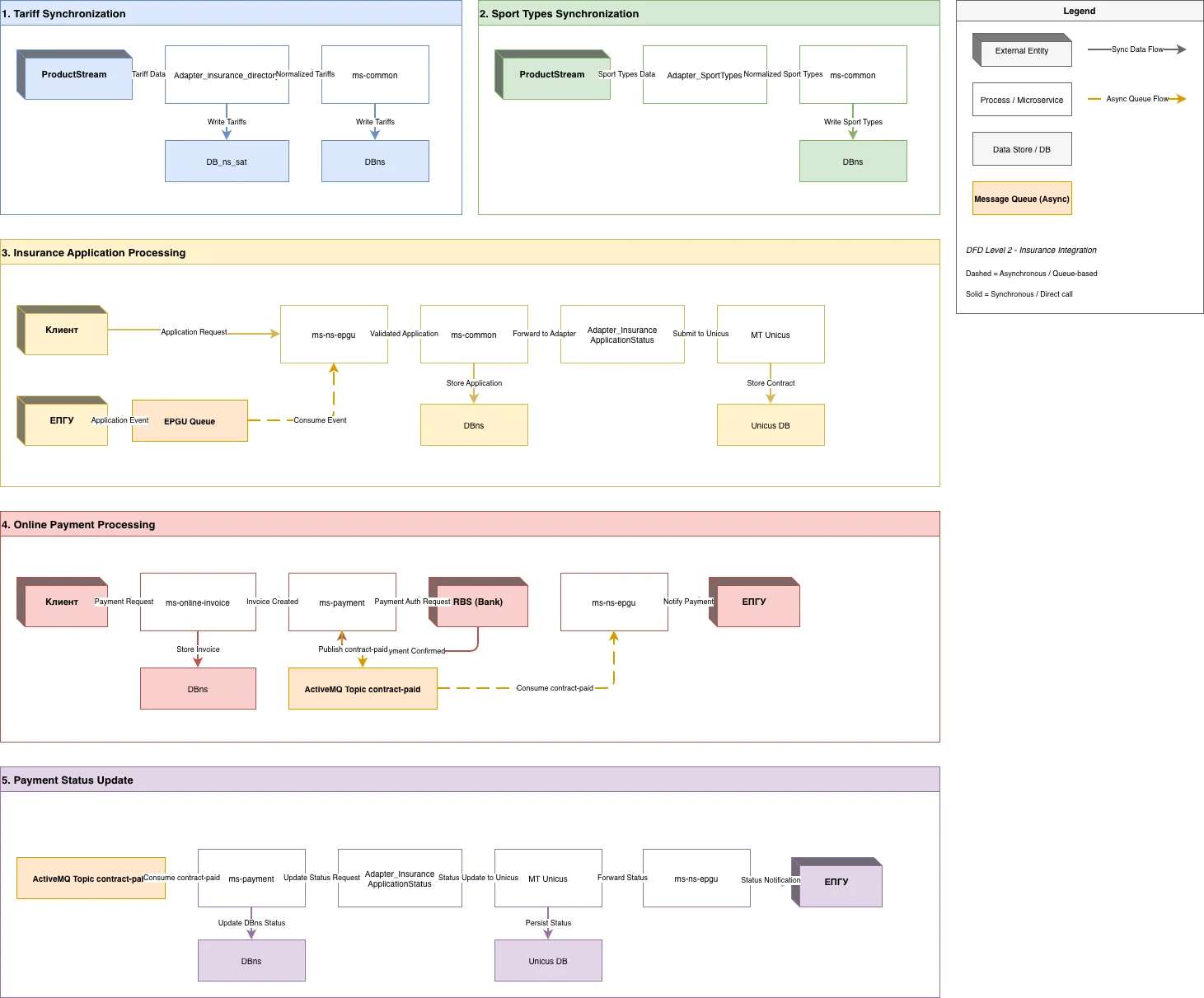
Insurance Integration DFD Level 2 models a multi-microservice ecosystem orchestrating tariff synchronization, sport types data, application processing, and online payment workflows. Data flows from external ProductStream and EPGU sources through dedicated adapters (Adapter_insurance_directory, Adapter_SportTypes, Adapter_Insurance ApplicationStatus) into shared ms-common and domain-specific microservices (ms-ns-epgu, ms-online-invoice, ms-payment), with synchronous direct calls and asynchronous ActiveMQ message queues coordinating state updates across multiple databases. The architecture demonstrates separation of concerns—tariff and sport data sync independently, while payment processing triggers contract-paid events that cascade through EPGU and Unicus systems. This pattern solves the challenge of integrating legacy insurance platforms (MT Unicus, RBS Bank) with modern microservices while maintaining eventual consistency through event-driven messaging. Fork and customize this diagram on Diagrams.so to adapt it for your own multi-domain insurance or financial services integration.