GCP Data Platform - Integration and BI Pipeline

GCPArchitectureadvanced
GCP Data Platform - Integration and BI Pipeline — GCP architecture diagram

About This Architecture

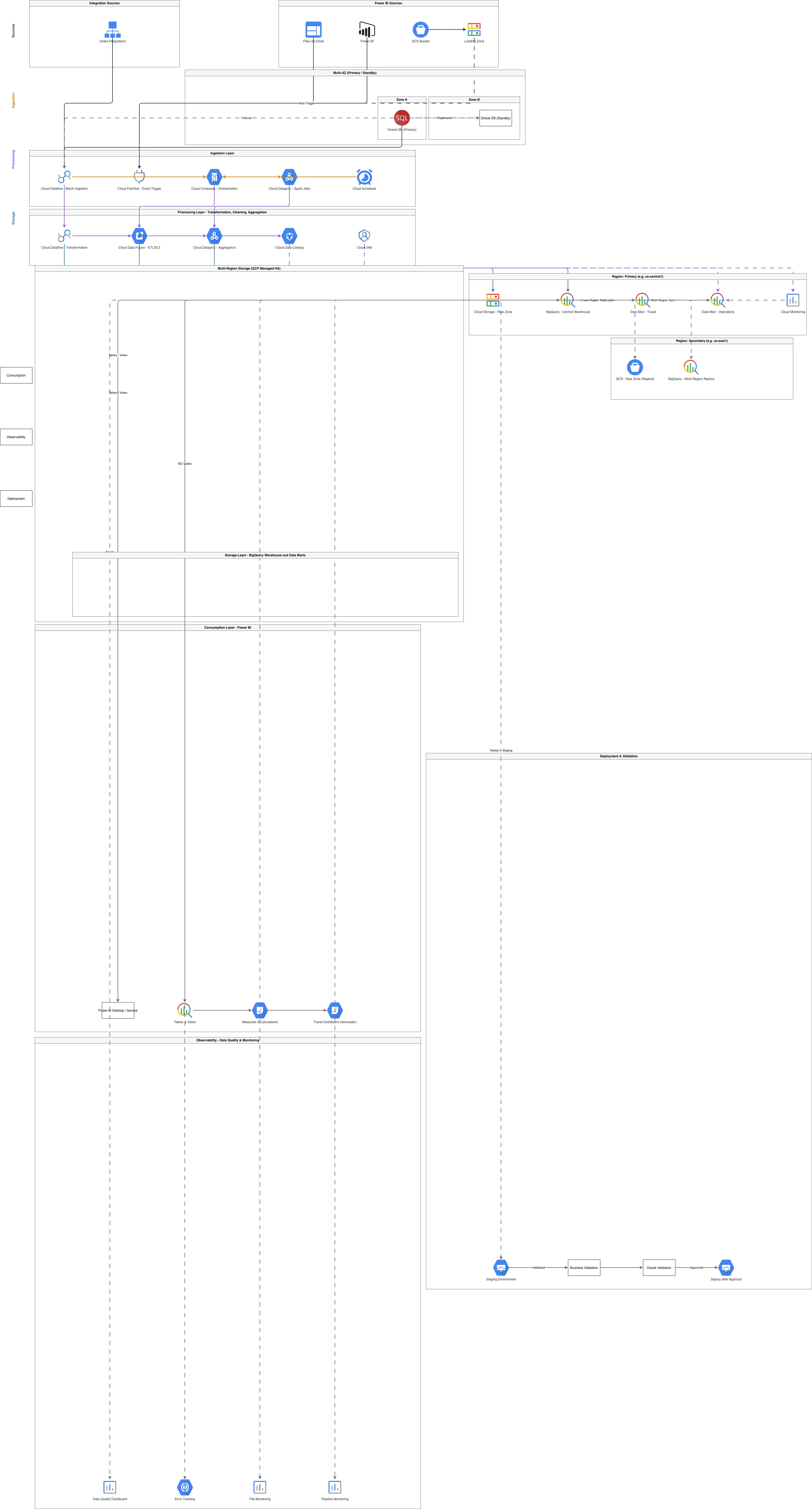
Enterprise data platform on GCP integrating Oracle databases, email-delivered files, and Power BI sources through a multi-layer pipeline using Cloud Dataflow, Pub/Sub, Composer, and Dataproc. Data flows from ingestion through Cloud Dataflow batch jobs and event-triggered Pub/Sub topics into Cloud Composer orchestration, which coordinates Dataproc Spark transformations and Data Fusion ETL/ELT operations. Processed data lands in Cloud Storage raw zones and BigQuery central warehouse, then distributes to Travel and Operations data marts with governance via Data Catalog and security via Cloud IAM. This architecture demonstrates best practices for scalable, governed data integration with automated orchestration, enabling real-time and batch processing at enterprise scale. Fork this diagram on Diagrams.so to customize data sources, add additional marts, or adjust transformation logic for your organization's specific requirements.

People also ask

How do you build a scalable data platform on GCP that integrates Oracle databases, email files, and Power BI with automated orchestration and data governance?

This diagram shows a production-grade GCP data platform using Cloud Dataflow for batch ingestion from Oracle and direct integrations, Cloud Pub/Sub for event-driven triggers from email files and Power BI, and Cloud Composer to orchestrate Dataproc Spark jobs and Data Fusion transformations. Data flows through Cloud Storage raw zones into BigQuery central warehouse, then distributes to Travel and O

GCPdata-engineeringBigQueryCloud Dataflowdata-platformETL-ELT
Domain:
Data Engineering
Audience:
Data engineers building enterprise data platforms on Google Cloud Platform

Generated by Diagrams.so — AI architecture diagram generator with native Draw.io output. Fork this diagram, remix it, or download as .drawio, PNG, or SVG.

Generate your own architecture diagram →

About This Architecture

Enterprise data platform on GCP integrating Oracle databases, email-delivered files, and Power BI sources through a multi-layer pipeline using Cloud Dataflow, Pub/Sub, Composer, and Dataproc. Data flows from ingestion through Cloud Dataflow batch jobs and event-triggered Pub/Sub topics into Cloud Composer orchestration, which coordinates Dataproc Spark transformations and Data Fusion ETL/ELT operations. Processed data lands in Cloud Storage raw zones and BigQuery central warehouse, then distributes to Travel and Operations data marts with governance via Data Catalog and security via Cloud IAM. This architecture demonstrates best practices for scalable, governed data integration with automated orchestration, enabling real-time and batch processing at enterprise scale. Fork this diagram on Diagrams.so to customize data sources, add additional marts, or adjust transformation logic for your organization's specific requirements.

People also ask

How do you build a scalable data platform on GCP that integrates Oracle databases, email files, and Power BI with automated orchestration and data governance?

This diagram shows a production-grade GCP data platform using Cloud Dataflow for batch ingestion from Oracle and direct integrations, Cloud Pub/Sub for event-driven triggers from email files and Power BI, and Cloud Composer to orchestrate Dataproc Spark jobs and Data Fusion transformations. Data flows through Cloud Storage raw zones into BigQuery central warehouse, then distributes to Travel and O

GCP Data Platform - Integration and BI Pipeline

GCPadvanceddata-engineeringBigQueryCloud Dataflowdata-platformETL-ELT
Domain: Data EngineeringAudience: Data engineers building enterprise data platforms on Google Cloud Platform
0 views0 favoritesPublic

Created by

April 22, 2026

Updated

April 22, 2026 at 10:59 AM

Type

architecture

Need a custom architecture diagram?

Describe your architecture in plain English and get a production-ready Draw.io diagram in seconds. Works for AWS, Azure, GCP, Kubernetes, and more.

Generate with AI