Full-Stack Hexagonal Architecture Overview

MULTIArchitectureadvanced
Full-Stack Hexagonal Architecture Overview — MULTI architecture diagram

About This Architecture

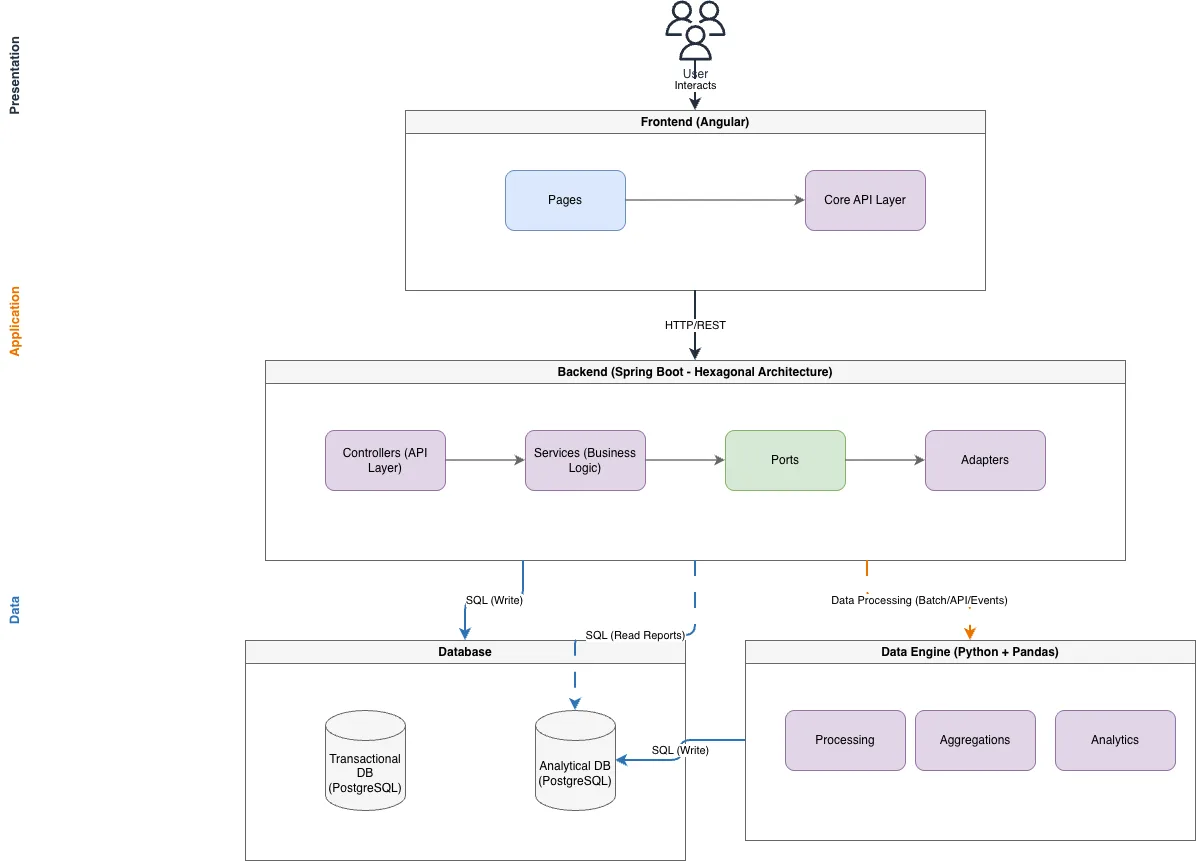
Full-stack hexagonal architecture separating presentation, application, and data layers across Angular frontend and Spring Boot backend with ports-and-adapters pattern. User requests flow from Angular frontend through Core API Layer to Controllers, Services, and Ports, with Adapters managing database and external system interactions. Transactional data persists in PostgreSQL while a Python Data Engine processes analytics into a separate Analytical DB, enabling independent scaling of operational and analytical workloads. This design enforces clear domain boundaries, testability, and technology independence—critical for teams evolving microservices or maintaining complex business logic. Fork this diagram on Diagrams.so to customize layers, add message queues, or document your own hexagonal implementation.

People also ask

How do you structure a full-stack application using hexagonal architecture with separate transactional and analytical databases?

This diagram shows a complete hexagonal architecture where Angular frontend communicates through a Core API Layer to Spring Boot backend Services via Ports and Adapters. Transactional data flows to PostgreSQL while a Python Data Engine processes analytics into a separate Analytical DB, enabling independent scaling and technology choices for operational versus analytical needs.

hexagonal-architecturespring-bootangularpostgresqlports-and-adaptersfull-stack-design
Domain:
Software Architecture
Audience:
Full-stack architects designing scalable, maintainable applications with hexagonal architecture patterns

Generated by Diagrams.so — AI architecture diagram generator with native Draw.io output. Fork this diagram, remix it, or download as .drawio, PNG, or SVG.

Generate your own architecture diagram →

About This Architecture

Full-stack hexagonal architecture separating presentation, application, and data layers across Angular frontend and Spring Boot backend with ports-and-adapters pattern. User requests flow from Angular frontend through Core API Layer to Controllers, Services, and Ports, with Adapters managing database and external system interactions. Transactional data persists in PostgreSQL while a Python Data Engine processes analytics into a separate Analytical DB, enabling independent scaling of operational and analytical workloads. This design enforces clear domain boundaries, testability, and technology independence—critical for teams evolving microservices or maintaining complex business logic. Fork this diagram on Diagrams.so to customize layers, add message queues, or document your own hexagonal implementation.

People also ask

How do you structure a full-stack application using hexagonal architecture with separate transactional and analytical databases?

This diagram shows a complete hexagonal architecture where Angular frontend communicates through a Core API Layer to Spring Boot backend Services via Ports and Adapters. Transactional data flows to PostgreSQL while a Python Data Engine processes analytics into a separate Analytical DB, enabling independent scaling and technology choices for operational versus analytical needs.

Full-Stack Hexagonal Architecture Overview

Multiadvancedhexagonal-architecturespring-bootangularpostgresqlports-and-adaptersfull-stack-design
Domain: Software ArchitectureAudience: Full-stack architects designing scalable, maintainable applications with hexagonal architecture patterns
0 views0 favoritesPublic

Created by

May 5, 2026

Updated

May 5, 2026 at 2:22 PM

Type

architecture

Need a custom architecture diagram?

Describe your architecture in plain English and get a production-ready Draw.io diagram in seconds. Works for AWS, Azure, GCP, Kubernetes, and more.

Generate with AI