Fuel Price Impact on Common People - Pakistan

GENERALOthersintermediate
Fuel Price Impact on Common People - Pakistan — GENERAL others diagram

About This Architecture

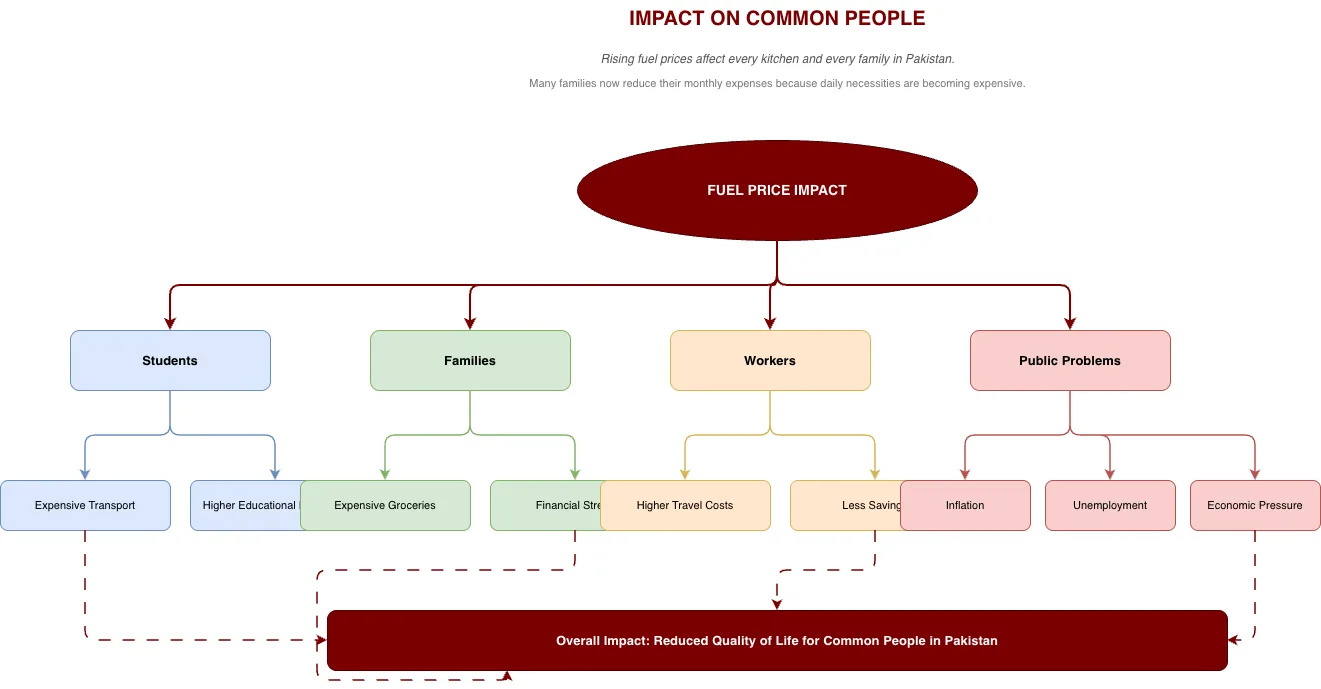
Fuel price escalation in Pakistan creates cascading socioeconomic impacts across students, families, and workers through interconnected cost pressures. Rising fuel costs directly increase transportation expenses for students, educational fees, grocery prices for families, and travel costs for workers, while simultaneously driving broader inflation and unemployment. This systemic pressure reduces household savings, amplifies financial stress, and creates widespread economic hardship across all demographic segments. The diagram maps these cause-and-effect relationships to illustrate how fuel price volatility translates into reduced quality of life for ordinary Pakistanis. Use this framework to analyze policy interventions, subsidy mechanisms, or mitigation strategies for vulnerable populations.

People also ask

How do rising fuel prices affect the daily lives of common people in Pakistan?

Rising fuel prices in Pakistan create a cascading impact: students face higher transport and education costs, families struggle with expensive groceries and financial stress, and workers experience reduced savings and increased travel expenses. These pressures collectively drive inflation and unemployment, ultimately reducing quality of life across all demographic segments.

Pakistan economyfuel price impactsocioeconomic analysispolicy analysisinflation unemploymenthousehold finances
Domain:
Other
Audience:
policy analysts and economists studying fuel subsidy impact in Pakistan

Generated by Diagrams.so — AI architecture diagram generator with native Draw.io output. Fork this diagram, remix it, or download as .drawio, PNG, or SVG.

Generate your own others diagram →

About This Architecture

Fuel price escalation in Pakistan creates cascading socioeconomic impacts across students, families, and workers through interconnected cost pressures. Rising fuel costs directly increase transportation expenses for students, educational fees, grocery prices for families, and travel costs for workers, while simultaneously driving broader inflation and unemployment. This systemic pressure reduces household savings, amplifies financial stress, and creates widespread economic hardship across all demographic segments. The diagram maps these cause-and-effect relationships to illustrate how fuel price volatility translates into reduced quality of life for ordinary Pakistanis. Use this framework to analyze policy interventions, subsidy mechanisms, or mitigation strategies for vulnerable populations.

People also ask

How do rising fuel prices affect the daily lives of common people in Pakistan?

Rising fuel prices in Pakistan create a cascading impact: students face higher transport and education costs, families struggle with expensive groceries and financial stress, and workers experience reduced savings and increased travel expenses. These pressures collectively drive inflation and unemployment, ultimately reducing quality of life across all demographic segments.

Fuel Price Impact on Common People - Pakistan

AutointermediatePakistan economyfuel price impactsocioeconomic analysispolicy analysisinflation unemploymenthousehold finances
Domain: OtherAudience: policy analysts and economists studying fuel subsidy impact in Pakistan
0 views0 favoritesPublic

Created by

May 16, 2026

Updated

May 16, 2026 at 8:45 AM

Type

others

Need a custom architecture diagram?

Describe your architecture in plain English and get a production-ready Draw.io diagram in seconds. Works for AWS, Azure, GCP, Kubernetes, and more.

Generate with AI