
About This Architecture
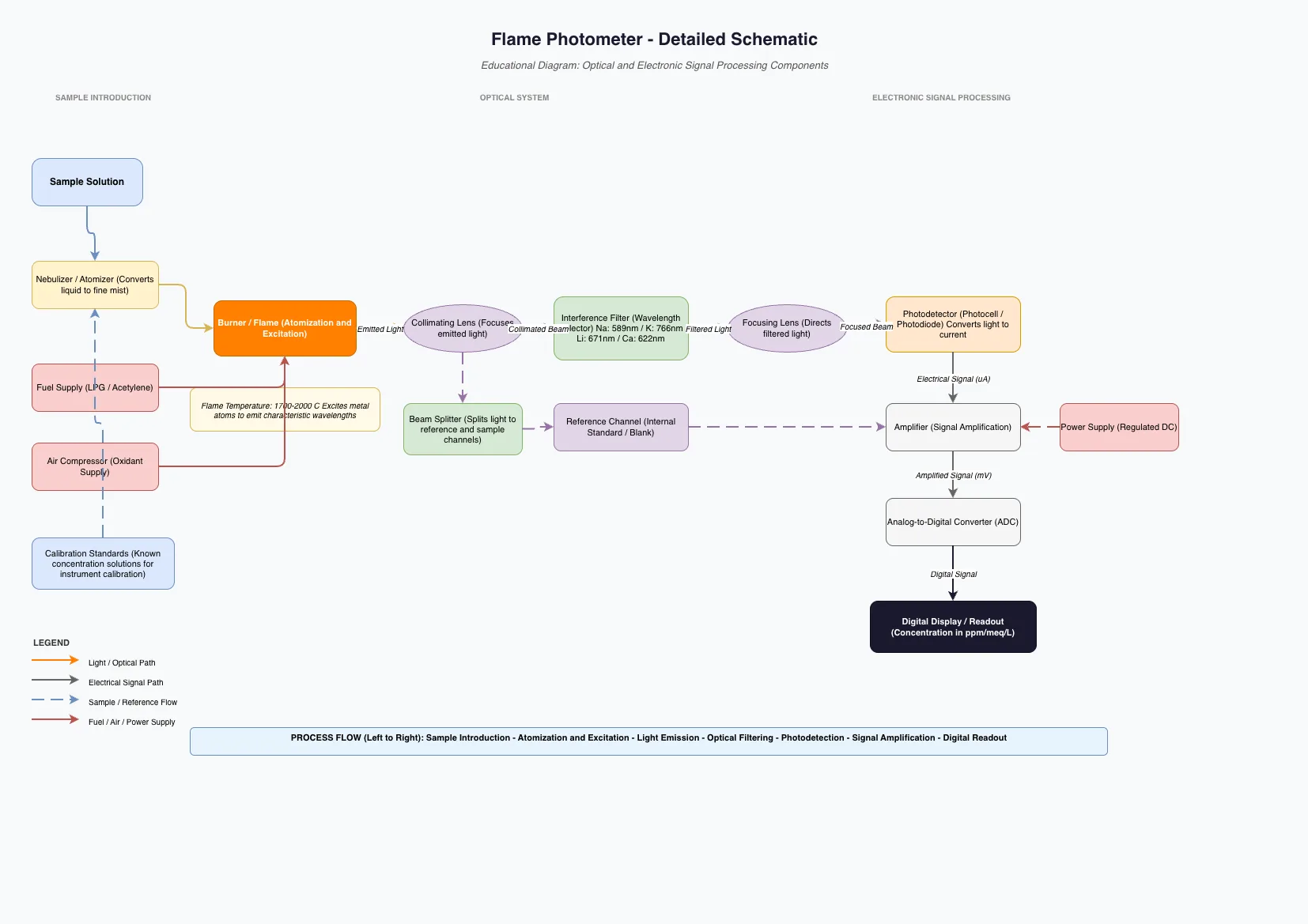
Flame photometer detailed schematic illustrates the complete optical and electronic signal processing pathway from sample introduction through digital concentration readout. The optical system comprises a nebulizer/atomizer, fuel supply, air compressor, and burner that excite metal atoms to characteristic emission wavelengths, followed by collimating lens, interference filter, focusing lens, and photodetector stages. Electronic signal processing includes amplification, analog-to-digital conversion, and calibration against reference standards with internal blank correction via beam splitter. This educational diagram demonstrates how flame photometry converts liquid samples into quantifiable light emissions for precise elemental analysis in clinical and research laboratories. Fork this schematic on Diagrams.so to customize component specifications, add measurement ranges, or adapt for teaching analytical instrumentation principles.