
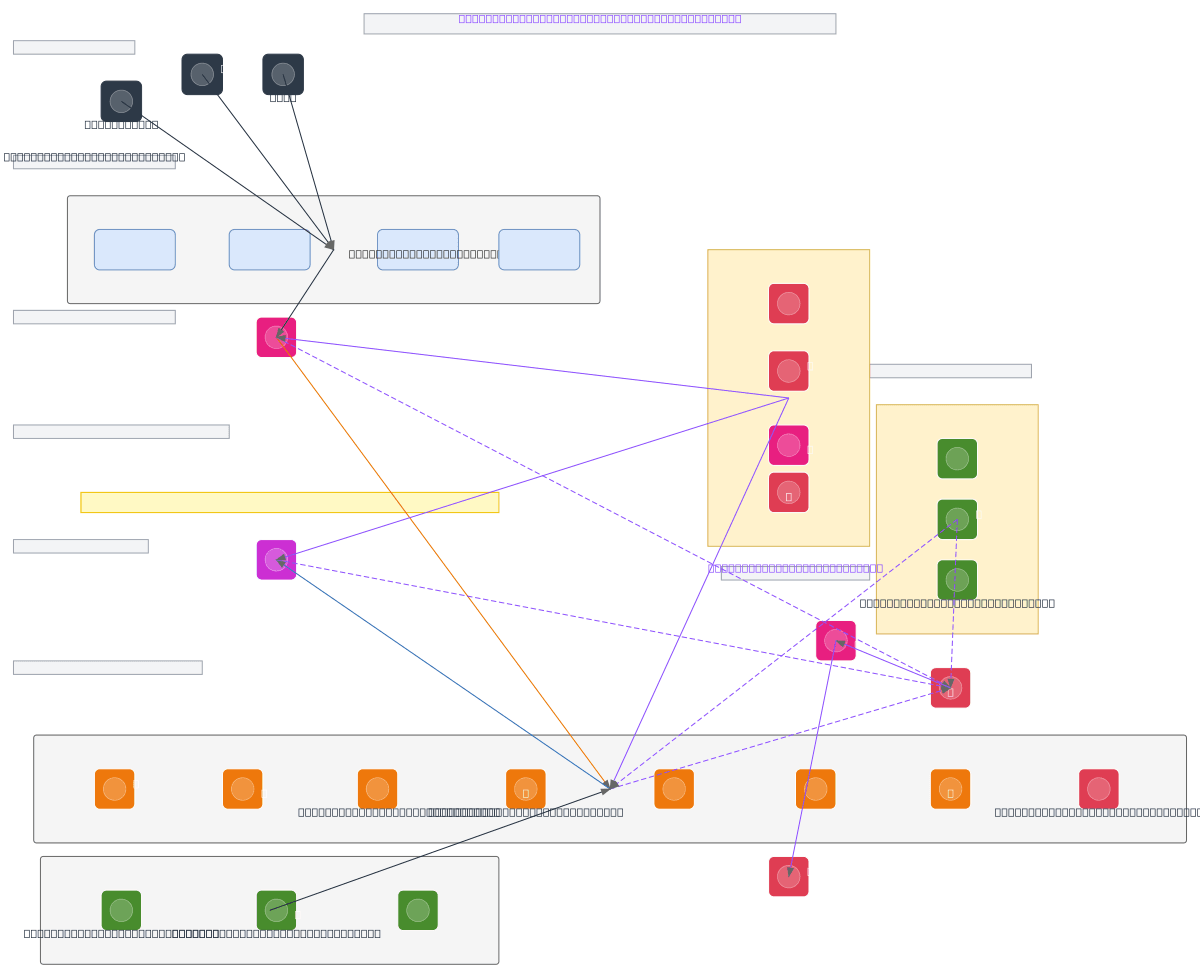
About This Architecture
Defense-grade DevSecOps enterprise architecture implements zero-trust principles across seven layers, from user personas through air-gapped offline modules, enforcing mTLS, JWT authentication, and RBAC at every boundary. Data flows from external SBOM and CVE sources through normalization, vulnerability mapping, and risk classification services into an encrypted PostgreSQL backend, with frontend dashboards exposing risk, inventory, and governance views to super admins, managers, and users. This architecture solves critical supply-chain security challenges by correlating component provenance, SBOM ingestion, and vulnerability feeds while maintaining strict access control and audit trails. Fork this diagram on Diagrams.so to customize threat models, add provider-specific WAF rules, or integrate your organization's KMS and secrets management. The air-gapped module design ensures offline SBOM and CVE import for high-security environments where internet connectivity is restricted.