Campus Navigation System Sequence Diagram
About This Architecture
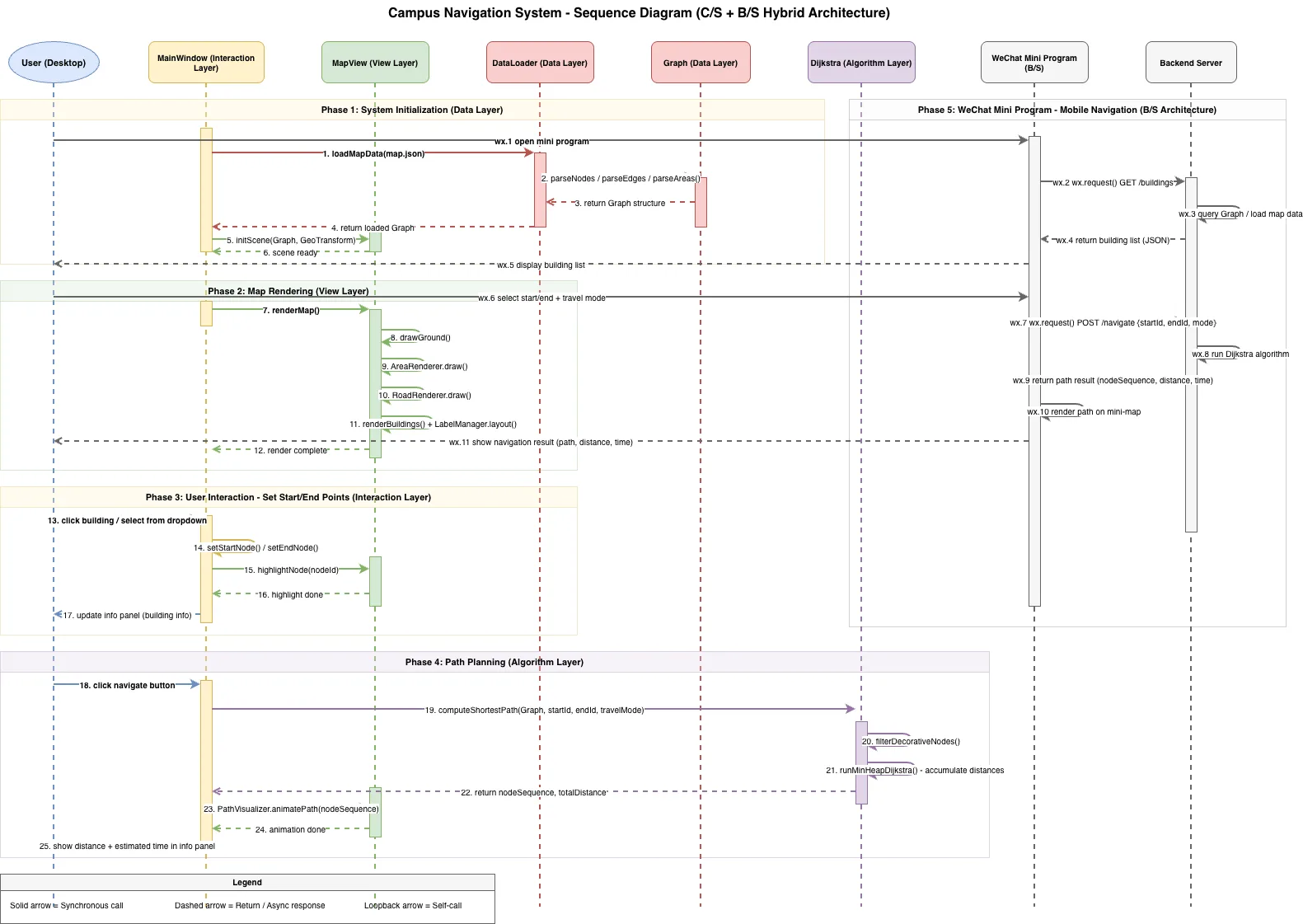
Campus navigation system using a hybrid C/S and B/S architecture with five distinct phases: system initialization, map rendering, user interaction, path planning via Dijkstra algorithm, and WeChat Mini Program mobile support. Data flows from DataLoader through Graph structures to the Dijkstra algorithm, which computes optimal routes and returns results to MapView for visualization on both desktop and mobile clients. This architecture demonstrates separation of concerns across interaction, view, data, and algorithm layers, enabling scalable route planning for large campus environments. Fork this diagram on Diagrams.so to customize layer interactions, add caching strategies, or extend with real-time traffic updates. The sequence pattern supports both synchronous desktop queries and asynchronous mobile requests via Backend Server.
People also ask
How do you design a campus navigation system that supports both desktop and mobile clients with efficient pathfinding?
This sequence diagram shows a hybrid C/S and B/S architecture where DataLoader initializes graph data, MapView renders the campus map, and the Dijkstra algorithm computes optimal routes when users set start/end points. The system handles desktop requests synchronously and mobile WeChat Mini Program requests asynchronously via a Backend Server, enabling scalable multi-client navigation.
- Domain:
- Software Architecture
- Audience:
- software architects designing hybrid C/S and B/S campus navigation systems
Generated by Diagrams.so — AI architecture diagram generator with native Draw.io output. Fork this diagram, remix it, or download as .drawio, PNG, or SVG.
