AWS Real-Time WebSocket Processing - Tokyo

AWSNetworkintermediate
AWS Real-Time WebSocket Processing - Tokyo — AWS network diagram

About This Architecture

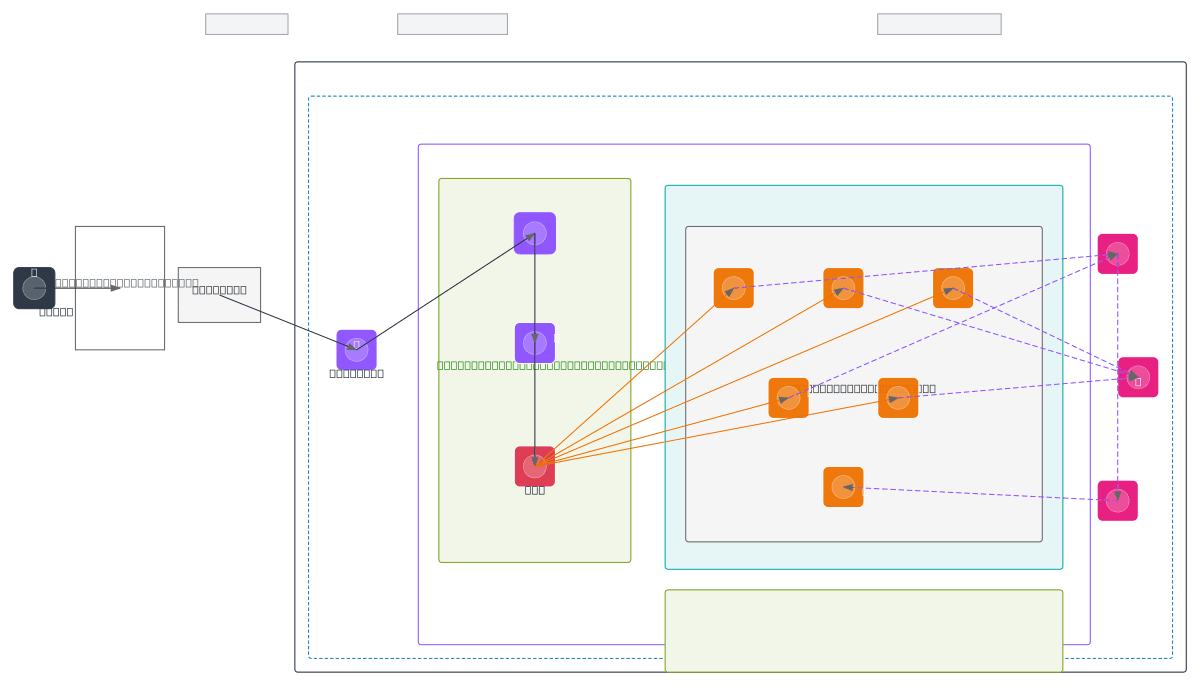
Real-time WebSocket processing architecture deployed in AWS Tokyo region (ap-northeast-1) using Route 53 DNS, ALB with WAF protection, and ECS Fargate tasks for stateful connection handling. Traffic flows from users through public internet to Route 53, then through Internet Gateway and ALB to five auto-scaled Fargate tasks behind WAF, ensuring DDoS protection and low-latency WebSocket connections. CloudWatch, CloudWatch Logs, and CloudWatch Alarms provide observability across the Core, Distribution, and Observability layers, enabling real-time monitoring and auto-scaling decisions. This architecture demonstrates best practices for highly available, secure WebSocket applications requiring sub-100ms latency in APAC regions. Fork this diagram on Diagrams.so to customize subnets, scaling policies, or add additional AWS services like ElastiCache or DynamoDB for session state.

People also ask

How do I architect a real-time WebSocket application on AWS in the Tokyo region with auto-scaling and DDoS protection?

This diagram shows a production-ready WebSocket architecture in ap-northeast-1 using Route 53 for DNS, ALB with WAF for DDoS protection, and five auto-scaled ECS Fargate tasks for stateful connection handling. CloudWatch Logs and Alarms provide observability and trigger scaling decisions, ensuring low-latency WebSocket connections for APAC users.

AWSWebSocketECS FargateReal-timeTokyo regionAuto-scaling
Domain:
Cloud Aws
Audience:
AWS solutions architects designing real-time WebSocket applications in Asia-Pacific regions

Generated by Diagrams.so — AI architecture diagram generator with native Draw.io output. Fork this diagram, remix it, or download as .drawio, PNG, or SVG.

Generate your own network diagram →

About This Architecture

Real-time WebSocket processing architecture deployed in AWS Tokyo region (ap-northeast-1) using Route 53 DNS, ALB with WAF protection, and ECS Fargate tasks for stateful connection handling. Traffic flows from users through public internet to Route 53, then through Internet Gateway and ALB to five auto-scaled Fargate tasks behind WAF, ensuring DDoS protection and low-latency WebSocket connections. CloudWatch, CloudWatch Logs, and CloudWatch Alarms provide observability across the Core, Distribution, and Observability layers, enabling real-time monitoring and auto-scaling decisions. This architecture demonstrates best practices for highly available, secure WebSocket applications requiring sub-100ms latency in APAC regions. Fork this diagram on Diagrams.so to customize subnets, scaling policies, or add additional AWS services like ElastiCache or DynamoDB for session state.

People also ask

How do I architect a real-time WebSocket application on AWS in the Tokyo region with auto-scaling and DDoS protection?

This diagram shows a production-ready WebSocket architecture in ap-northeast-1 using Route 53 for DNS, ALB with WAF for DDoS protection, and five auto-scaled ECS Fargate tasks for stateful connection handling. CloudWatch Logs and Alarms provide observability and trigger scaling decisions, ensuring low-latency WebSocket connections for APAC users.

AWS Real-Time WebSocket Processing - Tokyo

AWSintermediateWebSocketECS FargateReal-timeTokyo regionAuto-scaling
Domain: Cloud AwsAudience: AWS solutions architects designing real-time WebSocket applications in Asia-Pacific regions
0 views0 favoritesPublic

Created by

April 20, 2026

Updated

April 20, 2026 at 2:14 AM

Type

network

Need a custom architecture diagram?

Describe your architecture in plain English and get a production-ready Draw.io diagram in seconds. Works for AWS, Azure, GCP, Kubernetes, and more.

Generate with AI