AWS Highly Available Node.js Web Application
AWSArchitectureintermediate
AWS Highly Available Node.js Web Application — AWS architecture diagram

About This Architecture

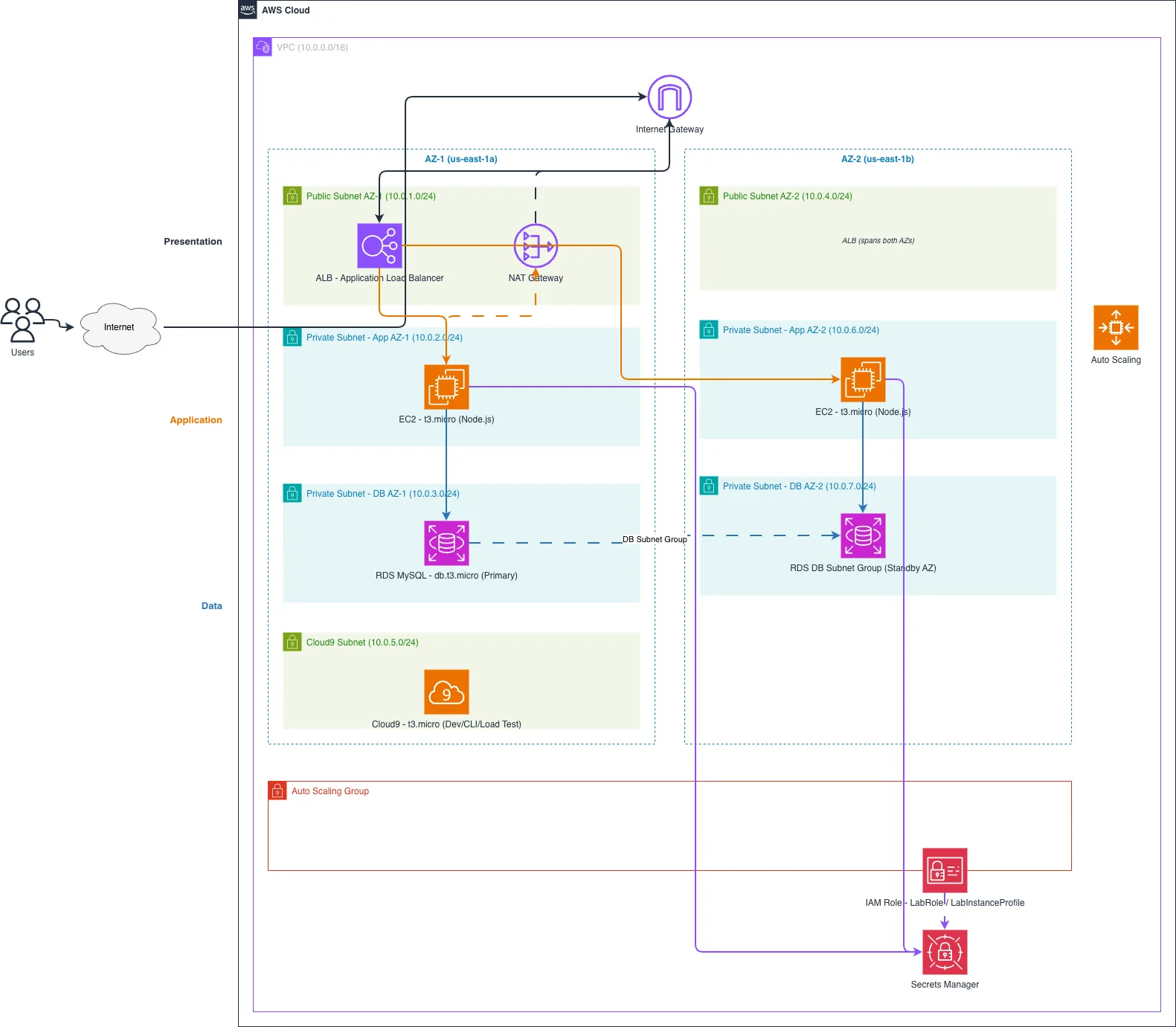
Multi-AZ Node.js web application on AWS using Application Load Balancer, Auto Scaling EC2 instances, and RDS MySQL with read replicas across two availability zones. Traffic flows from users through the Internet Gateway to the ALB, which distributes requests to Node.js EC2 instances in private subnets across AZ-1 and AZ-2, while database connections route to RDS with automatic failover. Secrets Manager secures database credentials via IAM roles, and NAT Gateway enables outbound internet access from private subnets without exposing instances. This architecture eliminates single points of failure, ensures automatic recovery from instance or AZ failures, and scales horizontally to handle traffic spikes. Fork this diagram on Diagrams.so to customize subnet ranges, instance types, or add additional services like CloudFront or ElastiCache. Cloud9 development environment is included for testing and load simulation within the VPC.

People also ask

How do I architect a highly available Node.js application on AWS across multiple availability zones?

This diagram shows a production-grade multi-AZ architecture with an Application Load Balancer distributing traffic to Auto Scaling EC2 instances running Node.js in private subnets across AZ-1 and AZ-2. RDS MySQL is configured with a primary instance and standby replica for automatic failover, while Secrets Manager stores database credentials accessed via IAM roles, eliminating hardcoded secrets.

AWSNode.jsHigh AvailabilityMulti-AZRDSAuto Scaling
Domain:
Cloud Aws
Audience:
AWS solutions architects designing highly available Node.js applications

Generated by Diagrams.so — AI architecture diagram generator with native Draw.io output. Fork this diagram, remix it, or download as .drawio, PNG, or SVG.

Generate your own architecture diagram →

About This Architecture

Multi-AZ Node.js web application on AWS using Application Load Balancer, Auto Scaling EC2 instances, and RDS MySQL with read replicas across two availability zones. Traffic flows from users through the Internet Gateway to the ALB, which distributes requests to Node.js EC2 instances in private subnets across AZ-1 and AZ-2, while database connections route to RDS with automatic failover. Secrets Manager secures database credentials via IAM roles, and NAT Gateway enables outbound internet access from private subnets without exposing instances. This architecture eliminates single points of failure, ensures automatic recovery from instance or AZ failures, and scales horizontally to handle traffic spikes. Fork this diagram on Diagrams.so to customize subnet ranges, instance types, or add additional services like CloudFront or ElastiCache. Cloud9 development environment is included for testing and load simulation within the VPC.

People also ask

How do I architect a highly available Node.js application on AWS across multiple availability zones?

This diagram shows a production-grade multi-AZ architecture with an Application Load Balancer distributing traffic to Auto Scaling EC2 instances running Node.js in private subnets across AZ-1 and AZ-2. RDS MySQL is configured with a primary instance and standby replica for automatic failover, while Secrets Manager stores database credentials accessed via IAM roles, eliminating hardcoded secrets.

AWS Highly Available Node.js Web Application

AWSintermediateNode.jsHigh AvailabilityMulti-AZRDSAuto Scaling
Domain: Cloud AwsAudience: AWS solutions architects designing highly available Node.js applications
0 views0 favoritesPublic

Created by

May 6, 2026

Updated

May 6, 2026 at 1:47 PM

Type

architecture

Need a custom architecture diagram?

Describe your architecture in plain English and get a production-ready Draw.io diagram in seconds. Works for AWS, Azure, GCP, Kubernetes, and more.

Generate with AI