
About This Architecture
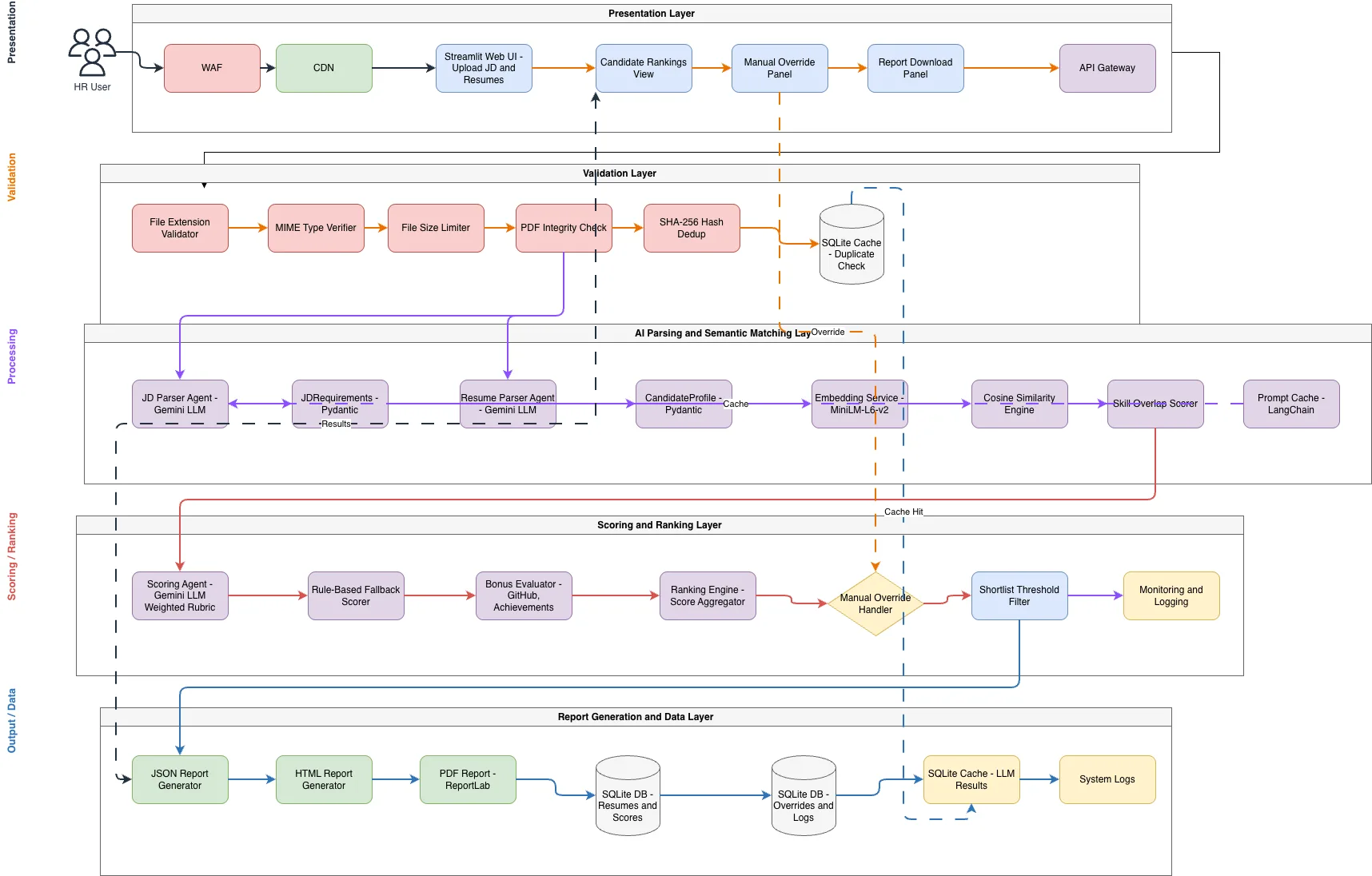
AI-powered resume screening system combining Gemini LLM parsing, semantic embeddings, and multi-stage scoring to automate candidate evaluation. HR users upload job descriptions and resumes through a Streamlit web UI protected by WAF and CDN, with files validated through extension, MIME type, size, and PDF integrity checks before deduplication via SHA-256 hashing. The JD Parser Agent and Resume Parser Agent extract structured requirements and candidate profiles using Pydantic models, which feed into an Embedding Service using MiniLM-L6-v2 for semantic similarity scoring via cosine distance and skill overlap analysis. A Scoring Agent applies weighted rubrics with rule-based fallback scoring, bonus evaluation from GitHub achievements, and manual override capabilities before ranking and filtering candidates above a configurable threshold. The system generates JSON, HTML, and PDF reports while maintaining comprehensive audit logs and LLM result caching via LangChain prompt optimization. Fork this diagram to customize scoring weights, add additional data sources, or integrate with your ATS platform.