AI Extractive Text Summarization Architecture

OCIArchitectureadvanced
AI Extractive Text Summarization Architecture — OCI architecture diagram

About This Architecture

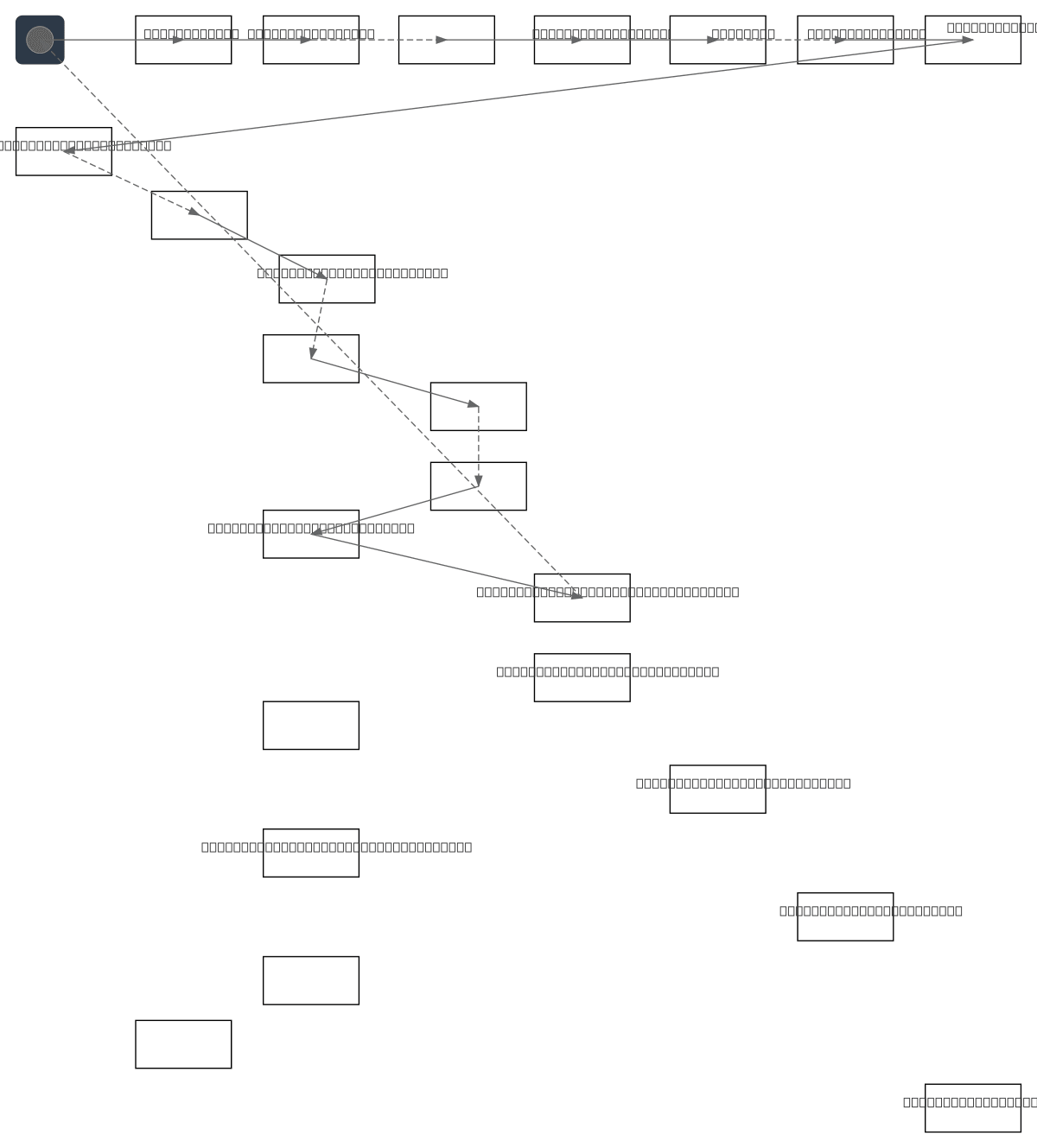
AI-powered extractive text summarization pipeline combining NLTK preprocessing, cosine similarity scoring, and NetworkX TextRank graph algorithms to automatically extract key sentences from documents. The architecture flows from user input through PDF extraction and text cleaning, then applies sentence similarity matrices and graph-based ranking to identify the most relevant content. This approach delivers fast, interpretable summaries without fine-tuned models, ideal for enterprises needing scalable document processing on OCI infrastructure. Fork this diagram to customize the NLP pipeline, swap ranking algorithms, or integrate additional LLM enhancement via Groq API for abstractive refinement. The modular design supports both direct text input and PDF uploads with downloadable summary outputs.

People also ask

How do you build an extractive text summarization pipeline on OCI using NLTK and TextRank?

This diagram shows a complete OCI NLP pipeline that ingests text or PDF documents, applies NLTK cleaning and tokenization, computes sentence similarity via cosine distance, constructs a TextRank graph using NetworkX, ranks sentences, and generates summaries with ROUGE evaluation. The Groq API module enables optional abstractive refinement, while Streamlit provides the user interface for input and

OCINLPtext summarizationmachine learningTextRankStreamlit
Domain:
Ml Pipeline
Audience:
Machine learning engineers building NLP text summarization systems on OCI

Generated by Diagrams.so — AI architecture diagram generator with native Draw.io output. Fork this diagram, remix it, or download as .drawio, PNG, or SVG.

Generate your own architecture diagram →

About This Architecture

AI-powered extractive text summarization pipeline combining NLTK preprocessing, cosine similarity scoring, and NetworkX TextRank graph algorithms to automatically extract key sentences from documents. The architecture flows from user input through PDF extraction and text cleaning, then applies sentence similarity matrices and graph-based ranking to identify the most relevant content. This approach delivers fast, interpretable summaries without fine-tuned models, ideal for enterprises needing scalable document processing on OCI infrastructure. Fork this diagram to customize the NLP pipeline, swap ranking algorithms, or integrate additional LLM enhancement via Groq API for abstractive refinement. The modular design supports both direct text input and PDF uploads with downloadable summary outputs.

People also ask

How do you build an extractive text summarization pipeline on OCI using NLTK and TextRank?

This diagram shows a complete OCI NLP pipeline that ingests text or PDF documents, applies NLTK cleaning and tokenization, computes sentence similarity via cosine distance, constructs a TextRank graph using NetworkX, ranks sentences, and generates summaries with ROUGE evaluation. The Groq API module enables optional abstractive refinement, while Streamlit provides the user interface for input and

AI Extractive Text Summarization Architecture

OCIadvancedNLPtext summarizationmachine learningTextRankStreamlit
Domain: Ml PipelineAudience: Machine learning engineers building NLP text summarization systems on OCI
0 views0 favoritesPublic

Created by

April 28, 2026

Updated

April 28, 2026 at 1:00 PM

Type

architecture

Need a custom architecture diagram?

Describe your architecture in plain English and get a production-ready Draw.io diagram in seconds. Works for AWS, Azure, GCP, Kubernetes, and more.

Generate with AI